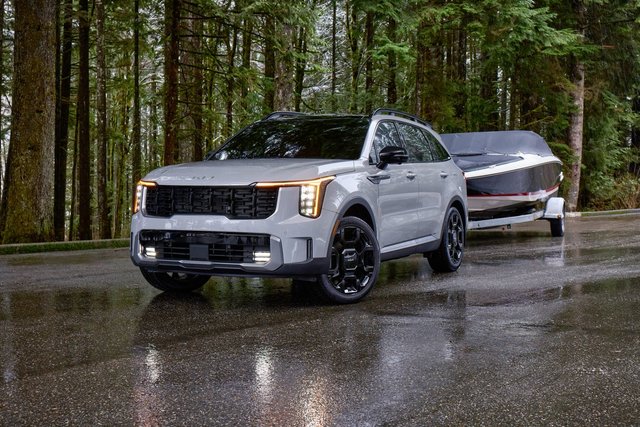
Towing a boat trailer on Highway 35 toward Bobcaygeon can turn nerve-wracking when crosswinds hit or when a transport truck passes at speed. Your trailer starts swaying side to side, and suddenly you're fighting to maintain control. This scenario happens often enough that Kia engineers developed Trailer Stability Assist (TSA) – a system that intervenes automatically when trailer sway threatens vehicle stability.
Understanding how TSA works helps explain why this technology provides genuine value for anyone towing watercraft or recreational trailers around the Kawartha Lakes region. The system operates invisibly until needed, but when trailer sway begins, it responds faster and more precisely than human reactions allow.
How Trailer Sway Develops
Trailer sway typically starts with various factors that can make the vehicle and trailer oscillate. According to Kia's documentation, these incidents mostly happen at high speed, but there's also risk when the trailer is affected by crosswinds, buffeting, or improper overloading.
Primary factors that cause swaying include:
High speed operation becomes problematic as velocity increases. A trailer that feels stable at 60 km/h might become unstable at 80 km/h due to aerodynamic forces and momentum effects.
Strong crosswinds from storms or passing large vehicles create side forces that can initiate oscillation. On open stretches like Highway 7 between Lindsay and Peterborough, crosswinds can suddenly push trailers sideways without warning.
Improper overloading in the trailer cargo area moves the centre of gravity and affects how the trailer responds to steering inputs or road irregularities.
Sudden steering wheel control or abrupt steering corrections can trigger instability patterns that grow worse without intervention.
Uneven road surfaces like expansion joints, pot holes, or pavement seams can initiate oscillation patterns, especially when combined with other factors.
TSA Detection and Response
The Trailer Stability Assist system operates as a vehicle stability control system, continuously analyzing the vehicle and trailer for instability. The system monitors several vehicle sensors while towing, tracking steering wheel position and rate of change, vehicle yaw rate, lateral acceleration, and individual wheel speeds.
When TSA detects trailer sway or oscillation, the system responds automatically by applying brakes to specific wheels and properly reducing engine power to stabilize the vehicle. This coordinated response creates forces that counteract the trailer's unwanted movement and restore stable tracking.
The system doesn't wait for dramatic swaying – it detects the early stages of oscillation and intervenes before the situation becomes dangerous. When the vehicle returns to stable operation, TSA stops operating and normal driving resumes.
System Operation in Practice
TSA works automatically without driver input or activation. You don't press buttons or adjust settings – the system remains active whenever the vehicle detects a connected trailer through the electrical connection.
When intervention occurs, you might notice:
- Automatic brake application to specific wheels
- Reduction in engine power
- Automatic stabilization of trailer movement
- Dashboard indicator confirming TSA activation
The system applies only the braking force and power reduction necessary to control the situation. It doesn't create dramatic stops or harsh interventions that might surprise drivers or passengers.
Kia Models with Trailer Stability Assist
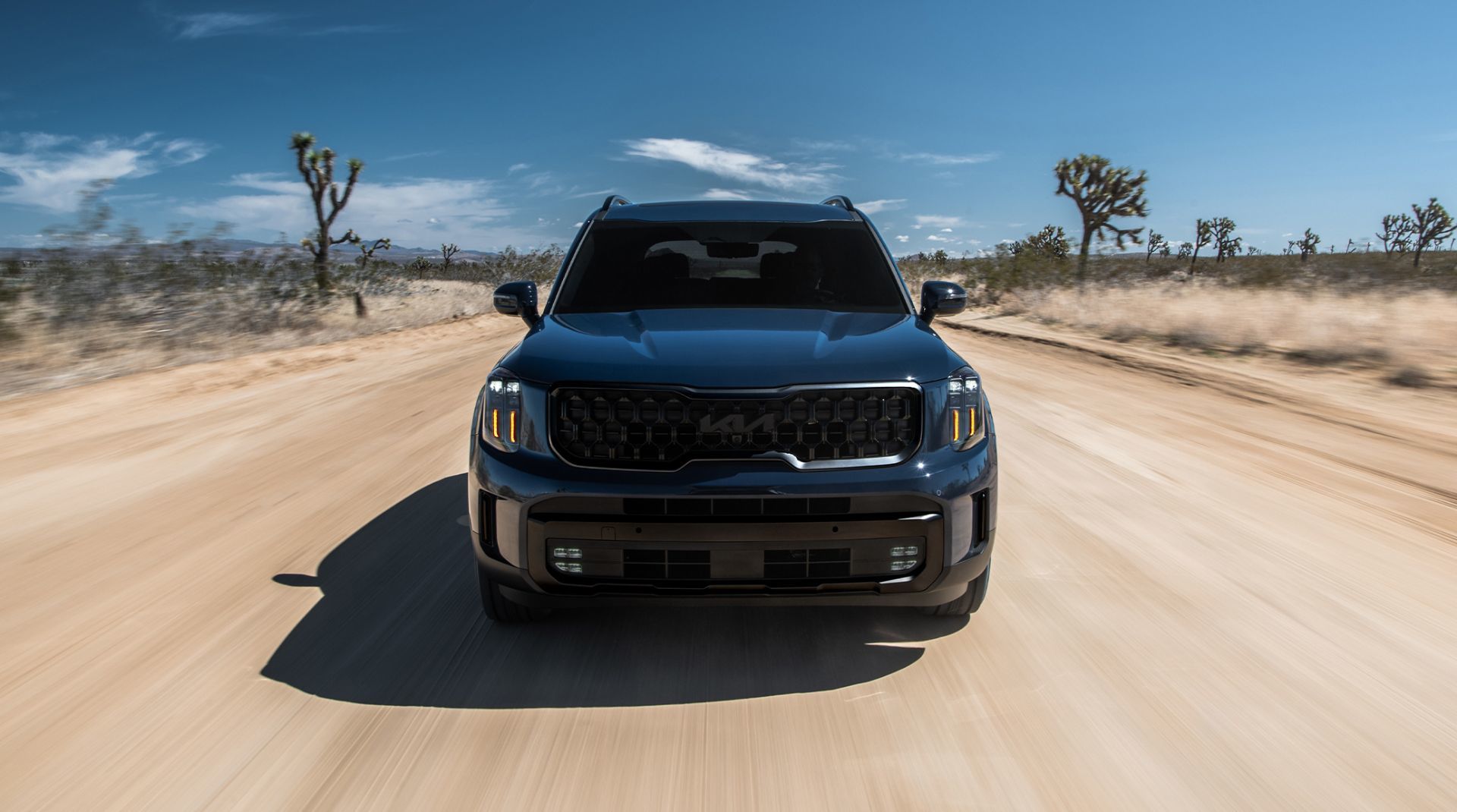
|
Vehicle
|
Maximum Towing Capacity
|
|
2025 Sorento
|
2,000-4,500 lbs
|
|
2025 Telluride
|
5,000-5,500 lbs
|
|
2026 Carnival
|
3,500 lbs
|
TSA comes standard across these model lines rather than as an optional feature. This universal availability reflects Kia's recognition that trailer stability benefits all towing scenarios, not just heavy-duty applications.
Real-World Scenarios Where TSA Helps
Highway bridge crossings often create wind tunnel effects that suddenly push trailers sideways. The Lift Lock area in Peterborough or bridges over the Trent-Severn Waterway can generate unexpected crosswinds that catch drivers off guard.
Passing or being passed by large vehicles creates air pressure changes that affect trailer stability. TSA intervenes when these pressure waves try to push your trailer out of its lane.
Emergency maneuvers to avoid road hazards can trigger trailer instability. If you need to change lanes quickly to avoid debris or stopped vehicles, TSA helps maintain control during the avoidance maneuver.
Varied road surfaces between cottage country locations often transition from smooth pavement to rough sections without warning. TSA compensates for the different grip levels and surface irregularities.
System Limitations and Considerations
TSA enhances stability but doesn't eliminate the need for proper towing practices. The system works best when trailers are loaded correctly with appropriate tongue weight distribution.
Speed remains important – TSA can't overcome the physics of excessive speed when towing. Maintaining reasonable speeds for conditions provides the best foundation for system effectiveness.
Trailer condition affects performance – worn tires, improper tire pressure, or damaged suspension components reduce TSA effectiveness. Regular trailer maintenance supports optimal system operation.
Weight limits still apply – TSA doesn't increase your vehicle's towing capacity. Exceeding manufacturer recommendations compromises both safety and system effectiveness.
Driver Education Benefits
Understanding TSA operation helps drivers recognize when the system activates and respond appropriately. Rather than fighting the system or panicking when intervention occurs, informed drivers can work with TSA to regain stability quickly.
The system also provides confidence for drivers who might otherwise avoid towing due to stability concerns. Knowing that electronic assistance helps maintain control encourages more people to enjoy recreational activities that require trailers.
Maintenance and Care
TSA requires no special maintenance beyond normal vehicle service. The system uses existing brake components and sensors, so regular brake inspections and proper brake fluid levels support TSA operation.
Electrical connections between vehicle and trailer must remain clean and secure for proper TSA function. Corroded or loose connections can interfere with trailer detection and system activation.
Trailer Stability Assist is one of those technologies that you hope never to need but appreciate when circumstances require intervention. For Lindsay-area residents who regularly tow boats or recreational equipment around cottage country, TSA provides an extra layer of confidence during highway travel. Learn more about TSA and other Kia towing technologies during your next visit to Lindsay Kia.
To learn more about Kia SUVs like the 2025 Kia Telluride, visit Kia.ca